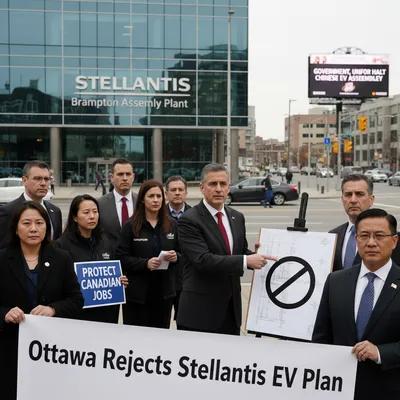
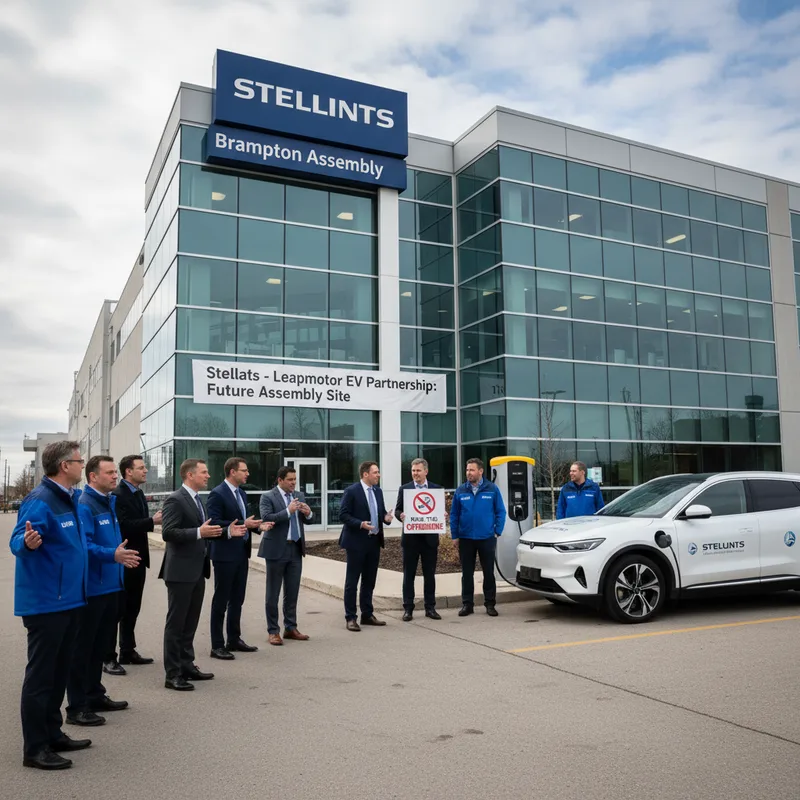
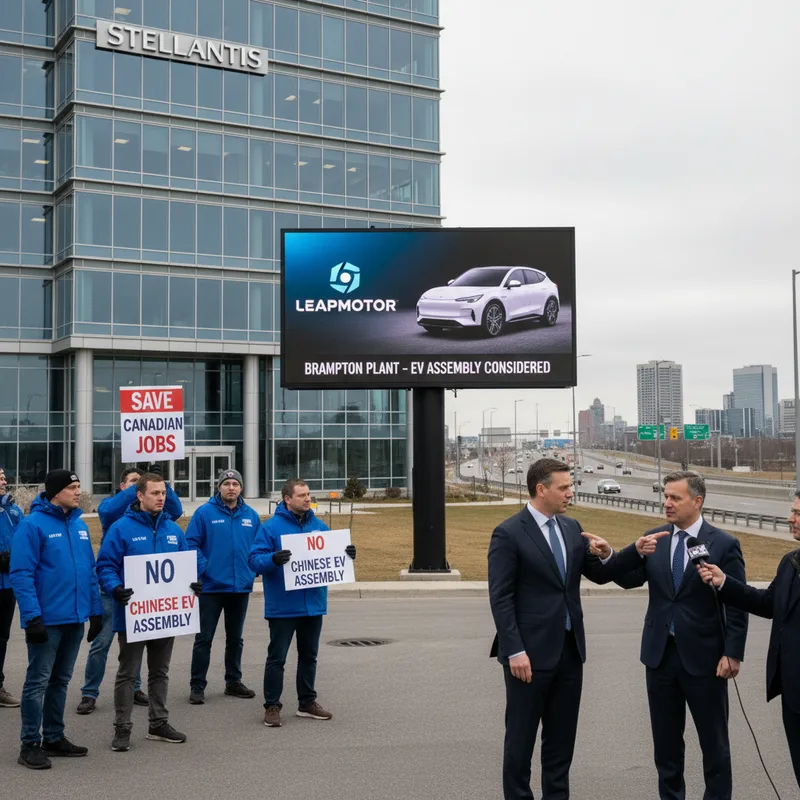
A potential plan by automaker Stellantis to use its idled Brampton assembly plant to build electric vehicles for its Chinese partner, Zhejiang Leapmotor Technology, has been met with strong opposition from both Unifor, the union representing autoworkers, and government leaders.
The proposal, first reported by Bloomberg News, would involve assembling Chinese EVs from "knock-down kits." This process involves shipping nearly completed vehicles from China to Canada for only minor final assembly. Critics argue this model would create very few jobs in Brampton and completely bypass the extensive Canadian auto parts supply chain.
Stellantis has not confirmed the plan, stating only that it is "actively evaluating future programs" for the Brampton facility and is in discussions with government officials. The company acquired a 21 per cent stake in Leapmotor for $1.6 billion in 2023 and formed a joint venture to expand the Chinese brand's presence outside of China.
The news comes as approximately 3,000 Stellantis workers in Brampton remain furloughed following the plant's idling in late 2023 for a planned retooling.
Government and union oppose potential deal
The reaction from union and government officials has been swift and negative. Unifor National President Lana Payne voiced "very grave concerns" about the proposal, emphasizing that this method of assembly is not genuine manufacturing.
It doesn’t use the Canadian supply chain. There are no jobs in auto parts and very few jobs assembling these knock-down kits," Payne said, adding that such plants "would employ a small fraction of workers while displacing tens of thousands of direct assembly and auto parts jobs.
Federal Industry Minister Mélanie Joly stated the plan does not meet the government's expectations for restoring production in Brampton. "It needs to support the local supply chain," Joly said. "We can't bring cars in a kit to Canada." She highlighted the importance of Canada's auto parts sector, which includes major suppliers like Magna International, Martinrea International Inc., and Linamar and employs around 200,000 workers.
Ontario Premier Doug Ford, speaking from a trade mission in Texas, called the prospect "unacceptable." He firmly stated his opposition to using "cheap Chinese parts and kits" for assembly in the province. "We want to make sure that Stellantis understands that they need to build Ontario-made cars with Ontario workers with Ontario parts," Ford said.
History of the Brampton plant and government deals
The future of the Brampton plant has been uncertain since production ended in December 2023. The facility was initially scheduled to be retooled for the production of the next-generation Jeep Compass. However, after the United States introduced new tariffs on auto imports, Stellantis announced it was moving production of that model to an Illinois plant, a decision the federal government called "unacceptable." Similar international trade tensions have played out in the Pacific, where New Zealand and Cook Islands sign defence pact after China row.
This conflict is complicated by significant public investment in the company. In 2022, the Canadian government and Stellantis signed a $529-million deal that barred the automaker from closing the Brampton plant before 2035. According to reports, the contract includes exceptions for circumstances beyond Stellantis's "reasonable control" that could render the plant "commercially unviable."
The disagreement over the Jeep Compass move prompted the federal government to launch a confidential dispute resolution process with the company in November 2025. In December, Minister Joly said the government would serve Stellantis with a notice of default under its funding contracts for projects in both Windsor and Brampton.
Stellantis has maintained that the Brampton plant is not shuttered and that it is working to find a viable long-term solution for the facility and its employees.
Stellantis's partnership with Leapmotor
The potential Brampton plan stems from a strategic partnership between Stellantis and Leapmotor. In 2023, Stellantis invested $1.6 billion for a 21 per cent stake in the Chinese automaker. The two companies also created Leapmotor International, a joint venture 51 per cent controlled by Stellantis, designed to manufacture and sell Leapmotor cars outside of China.
In a statement, a Stellantis spokesperson said the company had "nothing to announce" at this time but remains "focused on a strong Canadian footprint." The company said it aims to ensure any investment decision is sustainable and represents a long-term commitment that supports workers and suppliers. The automaker is weighing its options as it navigates a complex international trade environment.
The debate is further coloured by a recent federal trade deal that allows 49,000 Chinese EVs into Canada annually at a much-reduced tariff of 6.1 per cent, a measure that replaced a prohibitive 100 per cent tariff. At the time, the government suggested the deal would spur new investment in Canadian auto manufacturing.
The ongoing dispute resolution process between Ottawa and Stellantis remains confidential. Minister Joly’s office has reiterated that the government is actively engaging with all parties to "secure production, protect jobs and ensure long-term investment."
In a forward-looking statement, Joly emphasized the government's priorities, stating, "Any new auto investments will prioritize Canada’s supply chain, including Canadian labour and parts suppliers."