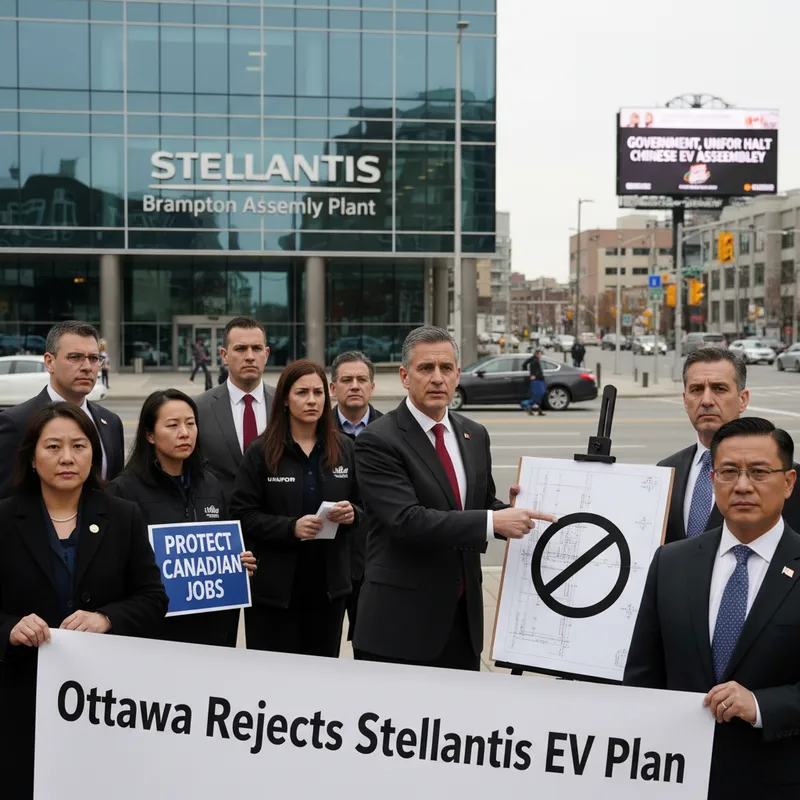
A proposal by Stellantis to assemble electric vehicles from its Chinese partner, Leapmotor, at its idled Brampton Assembly Plant has been rejected by the Canadian government and the union Unifor. The plan, which involved assembling cars from kits shipped from China, would have created only a fraction of the jobs lost when the plant ceased production of the Dodge Challenger and Charger muscle cars at the end of 2023, raising concerns about the future of one of the city’s largest employers.
The Brampton facility has been a cornerstone of the region's automotive sector for decades, most recently churning out six-figure volumes of the iconic Dodge muscle cars. The plant went quiet after the final models rolled off the line last year, with Stellantis initially planning a major retooling to build the next-generation Jeep Compass, including battery-electric variants. That retooling was expected to begin this year.
However, the automaker abruptly cancelled those plans last October, announcing the new Compass would be built in the United States instead. Stellantis cited a challenging regulatory environment, including lingering Trump-era tariff pressures and shifting U.S. federal EV tax credit policies, which have contributed to a slowdown in electric vehicle demand. The move prompted a sharp response from Ottawa, with Industry Minister Mélanie Joly launching a formal dispute-resolution process to hold Stellantis to investment commitments it had made in Canada.
Union and government push back on new proposal
In its search for a new product for the Brampton plant, Stellantis floated a strategy it has already deployed in Europe: assembling Leapmotor vehicles in a "complete knockdown" (CKD) format. This process involves shipping major components and sub-assemblies from China for final assembly in Canada. The proposal was met with immediate and firm opposition.
Unifor Local 1285, the union representing workers at the plant, strongly opposed the plan. The local’s president, Vito Beato, stated in an interview with Automotive News that a CKD operation would require only 200 to 300 workers. This represents less than 10 per cent of the workforce employed during the peak of the Dodge Challenger and Charger production, leaving the vast majority of skilled workers without jobs and decimating the local parts supply chain.
Beato clarified that the union is not opposed to Chinese automakers investing in Canada, but that any such investment must entail full-scale manufacturing operations that create a significant number of jobs and support domestic suppliers. The CKD model, in the union’s view, fails to meet this standard.

The federal government has echoed the union's concerns. Industry Minister Mélanie Joly has indicated that any federal support for projects at the plant would be conditional on maintaining a robust domestic supply chain. Having previously threatened legal action over the scrapped Jeep Compass plans, Ottawa is signalling it will not approve a plan that hollows out the local automotive ecosystem, echoing similar public outcry related to the government selling a $29-million jet. The government's stance aligns with its broader industrial strategy of building a complete EV supply chain in Canada, from mining critical minerals to assembling the final product.
An uncertain future for Brampton auto workers
The rejection of the Leapmotor plan leaves the future of the Brampton plant and its thousands of workers in limbo. For generations, the plant has provided stable, well-paying jobs that have supported families and ancillary businesses throughout Brampton and the Peel Region. The current idleness creates significant economic uncertainty.
Stellantis's head in Canada, Trevor Longley, has stated that the company is considering a "whole range of options" for the facility. One alternative that has been rumoured is the production of a future Chrysler model, though no firm commitment has been made. The ongoing discussions involve high stakes for all parties as they navigate the complex transition from internal combustion engines to electric vehicles.
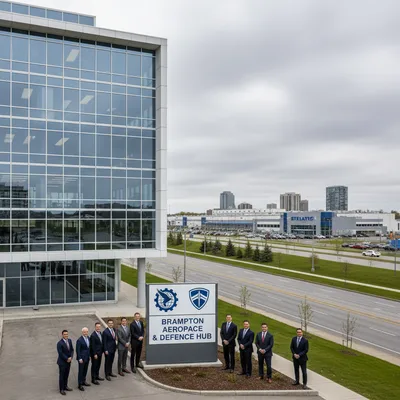
While the Brampton plant’s future is debated, the city has been working to diversify its industrial base. Recent efforts have successfully attracted investment in the aerospace and defence sectors, but the auto industry remains a critical pillar of the local economy.
Global partnerships and local consequences
The Brampton proposal stems from Stellantis’s deepening global partnership with Leapmotor. The multinational automaker, formed from the merger of Fiat Chrysler and PSA Group, holds an approximately 20 per cent stake in the Chinese EV manufacturer. More significantly, it controls a 51 per cent majority stake in Leapmotor International, a joint venture tasked with selling Leapmotor vehicles outside of China.
This partnership is already active in Europe, where Stellantis has begun selling the Leapmotor T03 city car and C10 SUV. The collaboration is expected to expand beyond sales into co-developing new electric vehicles for Stellantis’s own brands, such as Opel. This global strategy, aimed at quickly bringing affordable EVs to market, stands in contrast to the expectations of Canadian workers and policymakers for deep-rooted local production.
As negotiations continue, the federal and provincial governments, Stellantis, and Unifor face the challenge of finding a solution that secures a sustainable, long-term future for the Brampton plant. The outcome will be a major indicator of Canada's ability to maintain and grow its automotive manufacturing sector in an era of intense global competition and technological disruption. For now, thousands of workers are waiting to see if they will be building the next generation of vehicles or if the silence at their plant will become permanent.