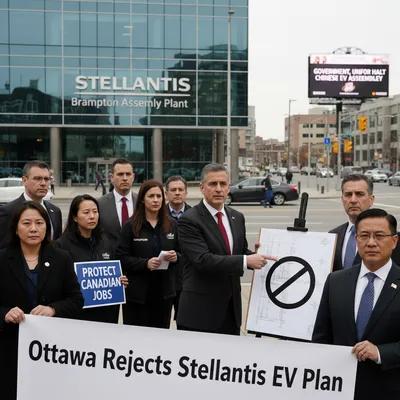
For forty years, Brampton has been synonymous with the auto industry, a core part of its economic identity. But that foundation has been shaken following the announcement that Stellantis is moving its planned production of the Jeep Compass to Illinois, leaving the future of its Brampton plant in question. Hundreds of workers have already relocated to Windsor for other opportunities, while thousands more face an uncertain future, waiting to see what comes next for the facility.
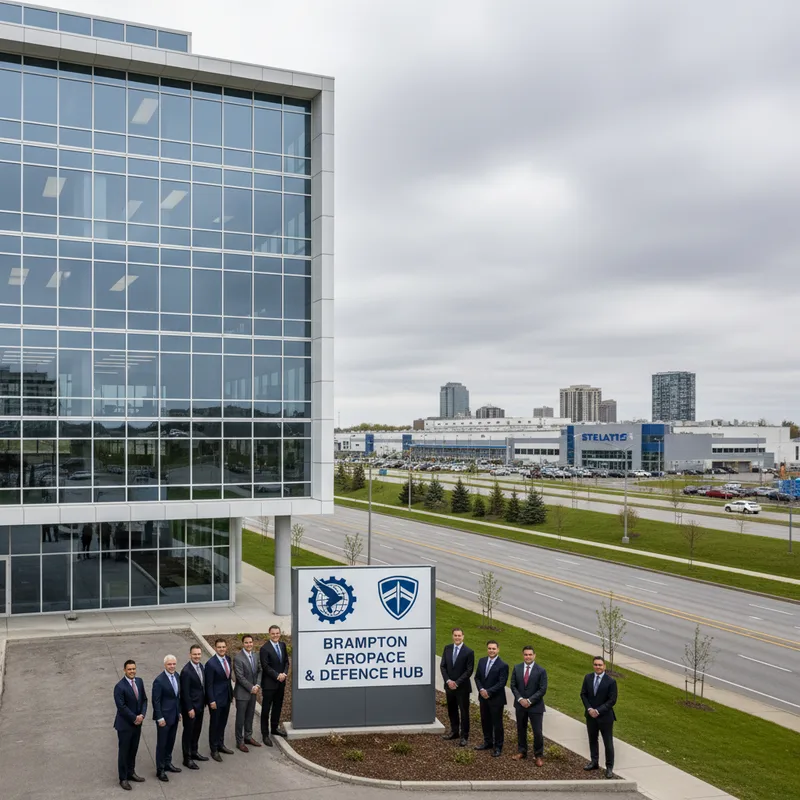
In the face of this significant blow, the city is not waiting idly. Instead, Brampton is executing an aggressive economic diversification strategy, shifting its focus from a primary reliance on auto manufacturing to the burgeoning fields of aerospace, defence, and advanced manufacturing. This proactive approach aims to build a more resilient local economy, less vulnerable to sector-specific shocks and international trade disputes.
A strategic pivot to new frontiers
The city's strategy involves actively courting industries of the future. This philosophy is shared by local businesses that have traditionally served the auto sector. A Berger Precision, a Brampton-based machining manufacturer with over two decades of experience, began its own diversification plan during the COVID-19 pandemic. Recognizing the shifting economic landscape, the company explored new opportunities beyond its traditional focus.
We love our auto jobs. But I don’t want us to be a single employment community. I don’t think it’s healthy. It’s dangerous, and so we’ve really focused on trying to diversify and look at where the jobs of tomorrow are.
“We essentially did a deep dive into the mega trends of 2021. aerospace defence, hydrogen, EV and medical and electrical infrastructure became areas of interest, and we started preparing for those industries,” says CEO Alexander Berger. This mirrors the city’s broader efforts to attract investment in sectors poised for significant growth.
The final frontier is proving to be a surprisingly fertile ground for Brampton’s economic ambitions. “We’ve got a number of space companies that are doing incredible work right now,” Mayor Brown says. He points to MDA Space, which secured a billion-dollar contract for the Canada-arm on the International Space Station, as a prime example. “We’ve got literally a dozen space companies now in Brampton,” he adds, highlighting a growing cluster of expertise.

Defence industry emerges as a major employer
The defence sector, in particular, has seen explosive growth within the city. This expansion is partly fuelled by Canada's commitment to increase its defence spending as part of its NATO obligations. Brampton is positioning itself to ensure local companies are primed to secure these valuable contracts.
At the forefront of this boom is Roshel, the leading North American manufacturer of smart armoured vehicles, headquartered in Brampton. The company, which initially focused on vehicles for transporting currency, found its trajectory completely altered by the war in Ukraine. “We got the first contract from the Canadian government for eight units, which we delivered right at the beginning of the war,” says Roman Shimonov, founder and CEO of Roshel. “We received a new order for 200 units, another 200 units. And so far, we delivered over 2,200 vehicles.”
Shimonov notes that the company expects to send a total of 3,000 vehicles to Ukraine by the end of the year. This rapid expansion has turned Roshel into a major local employer, with a workforce of over 500 people. The company recently announced a joint venture with Algoma Steel to produce ballistic steel, further cementing its role in Canada’s domestic defence industry.
Shimonov credits the company's success to its location. “Brampton is a very diversified city. We have an amazing access to highways and roads and skilled labour,” he says. “We have a proximity to access to the airport and to trains and to so many infrastructures. That makes Brampton a really unique and special city.”
Navigating economic headwinds
The city’s diversification was also a response to trade challenges, including the tariff wars under former U.S. President Donald Trump. In response, the city launched initiatives like the Mayor’s Tariff Taskforce and a “Go Global” exports program to help local businesses find markets beyond North America. Brampton’s Innovation District partners have also supported this shift, with 271 startups graduating from its programs, mirroring initiatives seen in other regions like Western Australia, where local projects received significant funding.
While attracting new industries, the city remains committed to its manufacturing roots. Mayor Brown has emphasized a dual approach of chasing new investment while protecting existing jobs. “I think we can chew gum and walk at the same time,” he says. This has included the bold and controversial step of rezoning the land occupied by the Stellantis plant for automotive use only. The move, which Brown admits the company did not favour, is intended to hold Stellantis to its commitment to reopen the plant.
Brampton’s evolution reflects its long history of growth and adaptation. From its early days as a small village to its current status as one of Canada’s largest and fastest-growing cities, it has continually reinvented itself. The current focus on aerospace and defence, alongside continued support for major public infrastructure projects like the new community centre, marks the next chapter in this ongoing story. This push for a multi-faceted economy is about securing a prosperous future, ensuring Brampton is not just an auto city, but a comprehensive hub for innovation and advanced manufacturing for decades to come.