
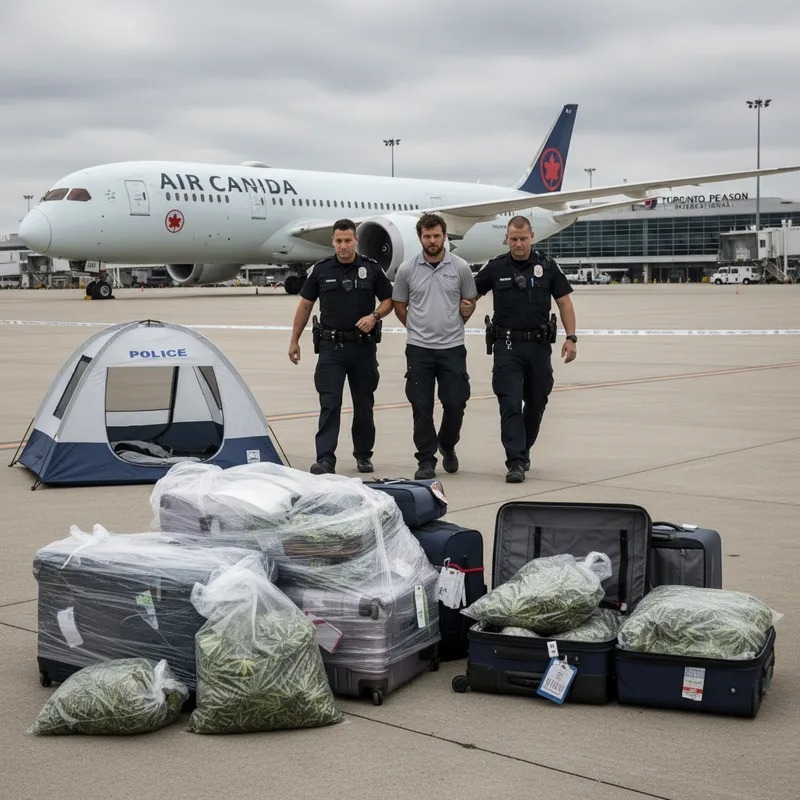
An Air Canada employee has been charged after an alleged attempt to smuggle a large quantity of cannabis through Toronto Pearson International Airport by using the luggage tags of two unsuspecting passengers.
The Royal Canadian Mounted Police (RCMP) announced on Monday that the scheme was uncovered on February 19 when Canada Border Services Agency (CBSA) officers at Pearson discovered approximately 66 kilograms of cannabis. The drugs were found split between two identical suitcases checked for a flight to Germany.
The luggage tags on the bags were assigned to two German citizens who were travelling separately and did not know each other. Both passengers were initially arrested, but they denied ownership of the suitcases containing the drugs. Investigators from the RCMP’s Toronto Airport Detachment confirmed that neither traveller had actually checked in the bags in question, and they were subsequently released.
Investigation points to insider scheme
According to police, the investigation revealed that an Air Canada employee working in the airport’s baggage area allegedly took the legitimate luggage tags from the passengers' actual baggage and placed them onto the two suitcases packed with cannabis. This action was a deliberate attempt to exploit the baggage handling system to move the illegal drugs onto the international flight without detection.
The incident highlights a significant security vulnerability at Canada's busiest airport, involving the potential for insider threats. Airport and airline employees hold positions of trust and have access to secure areas, which can be exploited for criminal activities. This case bears similarities to other trafficking schemes at major international hubs, including a recent case in Brantford where dental patients were urged to get HIV tests following a clinic closure.
Security at major transportation hubs like Pearson is a multi-layered effort involving airport authorities, airlines, the CBSA, and police forces like the RCMP and Peel Regional Police. However, conspiracies involving employees can bypass many standard security measures, posing a persistent challenge for law enforcement.
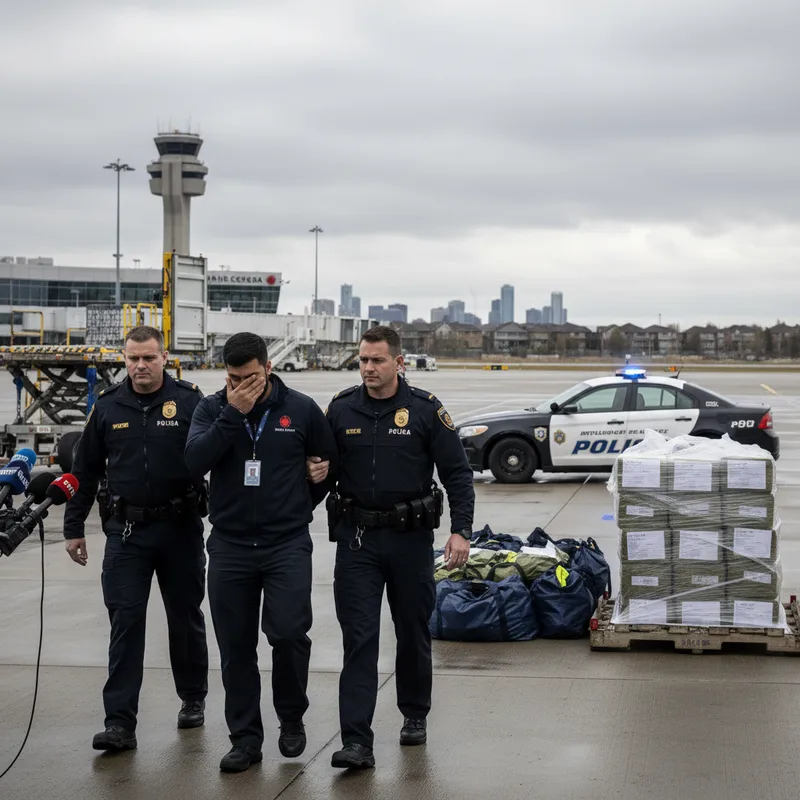
Suspect arrested and charged
Following a nearly month-long investigation, the RCMP arrested Atasha Weathley, a 32-year-old Mississauga resident, on March 12. Weathley, an Air Canada employee, faces charges of possession for the purpose of export under the Cannabis Act and conspiracy to commit an indictable offence under the Criminal Code of Canada.
The charges underscore the serious legal consequences of attempting to transport cannabis across international borders. Since the legalization of recreational cannabis in Canada in 2018, authorities have maintained strict rules against its international transport. The federal Cannabis Act explicitly states that it is illegal to take cannabis out of or bring it into Canada, regardless of whether it was legally purchased. Travellers caught doing so can face severe criminal penalties both in Canada and in their destination country.
Broader implications for airport security
The alleged conspiracy raises questions about the security protocols governing baggage handling and the vetting of airline employees. While this incident was thwarted by the vigilance of CBSA officers, it serves as a stark reminder of the ongoing threat posed by organized crime seeking to exploit aviation infrastructure for trafficking drugs and other illicit goods.
Airlines and airport operators continuously update their security procedures to mitigate such risks, often in collaboration with law enforcement agencies worldwide. These measures include enhanced employee screening, surveillance of secure areas, and unpredictable inspection protocols. This arrest is a testament to the collaborative efforts between different agencies working to secure Canada's borders.
Similar smuggling attempts have been uncovered at other major airports, often leading to reviews of security policies. The use of unsuspecting passengers as unwitting mules, a technique known as a "bag swap," is a known tactic for organized criminal groups. By leveraging an insider, the perpetrators aim to distance themselves from the physical contraband, making it more difficult for authorities to trace the shipment back to its source.
Weathley was held for a bail hearing and has since been released with conditions. The accused is scheduled to make a court appearance in Brampton on April 10.