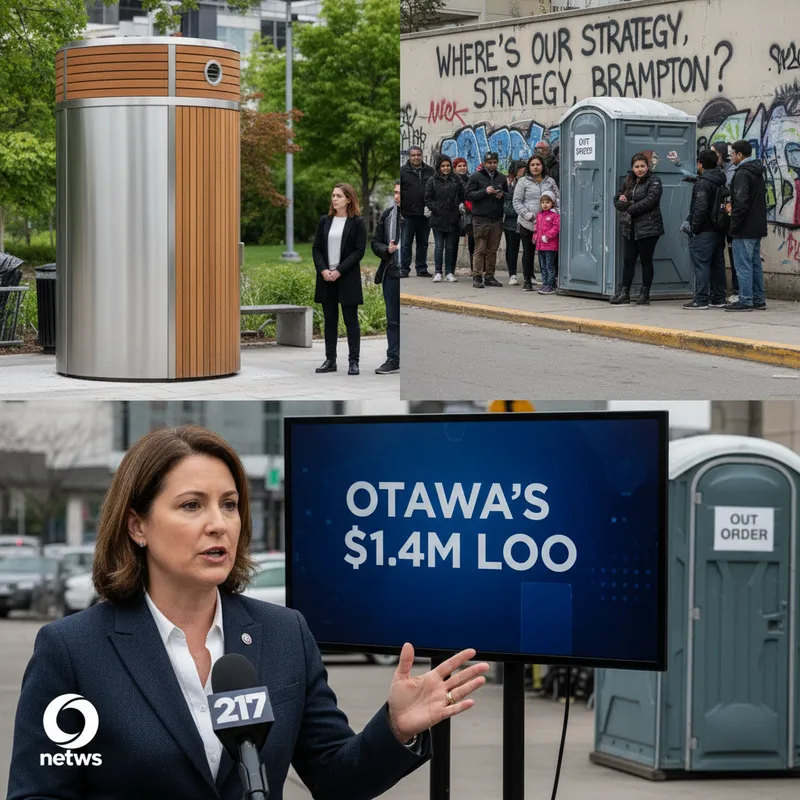
A plan for a single public washroom in Ottawa now projected to cost $1.4 million is sparking a wider debate about the lack of public facilities in urban centres, raising questions for city planners and politicians here in Brampton.
In Canada's capital, Somerset ward Coun. Ariel Troster is pushing for a city-wide public washroom plan after a facility earmarked for the corner of Bank and Somerset streets saw its budget swell by $400,000 before a shovel has even hit the ground. The spiralling costs and the public health concerns driving the initiative are a case study for municipalities like Brampton, where public amenities have not always kept pace with rapid growth.
The anatomy of a $1.4-million toilet
The washroom project in Ottawa was initially approved with a $1 million budget for 2025. However, city staff recently revealed the price tag has increased by 40 per cent. The reason, according to Marcia Wallace, the city’s general manager of planning, development and building services, is the need for a “more security-focused design.”
This shift in design philosophy comes in the wake of challenges with vandalism and public safety. In February, Ottawa's transit agency, OC Transpo, was forced to temporarily close washrooms in its LRT stations due to issues including extensive vandalism and needle use. According to Wallace, the city is now pivoting away from a self-cleaning model to a more robust structure that can better withstand “mischief and vandalism.” These challenges are not unique to Ottawa. Municipalities across the Greater Toronto Area and beyond are confronting the high costs of building and maintaining public infrastructure that is safe, accessible, and durable. For instance, Ballarat council plans a transfer station upgrade to ease queues and curb illegal dumping, showcasing similar infrastructure challenges. For Brampton, the Ottawa example serves as a stark reminder that planning for such facilities must include significant upfront investment in security features and a long-term budget for maintenance and cleaning, factors that can quickly inflate costs.
A question of public health and dignity
Coun. Troster has described the lack of accessible public washrooms as a matter of public health and human dignity. She noted that public urination and defecation have become a serious problem downtown, stating she witnesses human excrement on the streets of her ward daily.
This is a fundamental public service we are failing at and it’s a fundamental public health emergency.
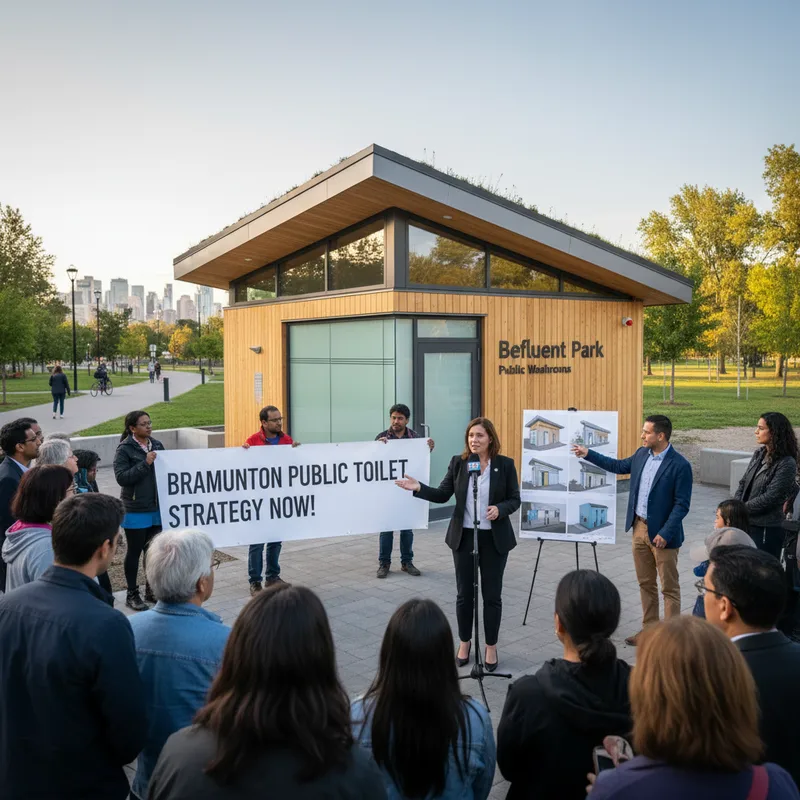
The World Health Organization emphasizes that adequate sanitation is a basic human right and essential for public health. Access to clean and safe washrooms is critical not only for a city’s most vulnerable, including those experiencing homelessness, but also for families with young children, seniors, individuals with medical conditions, and tourists. As Brampton continues to develop its urban identity, particularly in its downtown core, the availability of such fundamental amenities directly impacts its reputation as a welcoming and inclusive city.
Could Brampton council handle such a project?
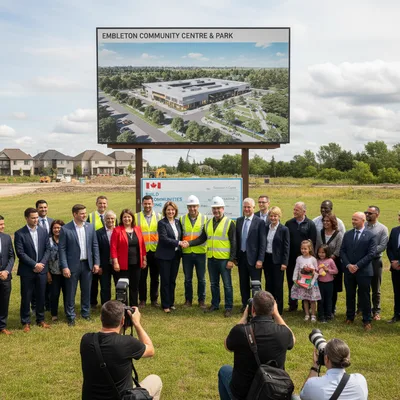
While Brampton has celebrated the development of major new facilities, including a new federally co-funded community centre, there is a growing concern among some residents about a perceived “loss of public spaces” and basic amenities. The need for accessible public washrooms is most acute in high-traffic areas like the downtown Four Corners, Gage Park, and near major transit hubs that are central to projects like the endlessly delayed Hurontario LRT.
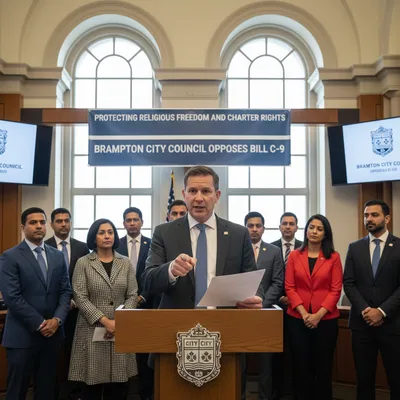
However, Brampton City Council has a documented history of political friction and infighting. In recent years, council meetings have been boycotted by councillors who alleged that “democracy is under siege,” creating a fractured political environment. This history raises serious questions about council's ability to unite and push forward a proactive, long-term strategy for a potentially costly and complex issue like a network of public washrooms.
Without a cohesive vision and political will, Brampton risks falling into a reactive cycle, only addressing the need for public facilities after it becomes a crisis, likely facing the same sticker shock and public outcry seen in Ottawa.
Exploring solutions beyond brick and mortar
Coun. Troster’s motion in Ottawa offers a multi-pronged approach that Brampton could study. Beyond simply building new facilities, she has asked staff to compile an inventory of all existing publicly accessible washrooms in the city, with a view to expanding their hours of operation and increasing the frequency of cleaning.
Another key component of her proposal involves creating partnerships with local businesses. This model would see the city sponsor and support private businesses that agree to open their washrooms to the general public, helping to offset their cleaning and monitoring costs. Such a program could be a cost-effective way to quickly increase the number of available facilities in areas like Downtown Brampton, leveraging existing infrastructure through collaboration with the local Business Improvement Area (BIA).
With major international events like the FIFA World Cup on the horizon, which will see an influx of visitors to the entire region, the need for public infrastructure will only grow. Neighbouring Toronto is already planning for a massive influx of people, having recently scrapped entry fees for its World Cup fan zones to improve public access. Brampton must also prepare for this regional growth.
Ultimately, the debate in Ottawa serves as a critical and timely warning for Brampton. The city has a choice: either begin the proactive and collaborative work of developing a comprehensive public washroom strategy now, or wait until the issue becomes a public health and political crisis. For a city positioning itself as a modern, world-class urban centre, ensuring access to basic dignities for its residents and visitors is a fundamental test of its readiness for the future.