Parents moving to Brampton, or growing their family here, quickly learn that “best school” depends on more than a single score. In Peel, you are choosing between public and Catholic boards, French-language options, and a growing private-school market. You are also weighing practical realities like childcare, commute, class size, newcomer supports, and whether your child will thrive in a specialized program.
This 2026 guide is written for parents and new residents who want to research and compare school quality in Brampton with clear, local steps. We explain how to use EQAO and Fraser Institute report cards properly, what to look for beyond rankings, and where to start if you are deciding between neighbourhoods. We also list notable Brampton schools across elementary and secondary, with addresses and the kind of programs families ask about most.
Important note on “rankings”, Ontario does not publish an official government ranking of schools. The two most commonly cited data sources are EQAO provincial assessments and the Fraser Institute’s school report cards, which use EQAO results to produce a 0 to 10 score. Rankings are useful, but they are not a full picture, and they can lag behind what is happening on the ground in fast-growing communities like Brampton.
How to compare Brampton schools using EQAO and Fraser Institute scores
If you are new to Ontario, here is the simplest way to understand the data parents tend to cite in Brampton.
EQAO, the Education Quality and Accountability Office, runs province-wide assessments in Grades 3 and 6 (reading, writing, math), Grade 9 math, and the Ontario Secondary School Literacy Test (OSSLT) for Grade 10. EQAO results are public and meant to help identify strengths and gaps over time. You can start at EQAO’s official site and search by board and school: https://www.eqao.com/.
The Fraser Institute “report card” summarizes several indicators, heavily weighted to EQAO outcomes, and assigns a score out of 10. In Ontario, the most-used interface is Compare School Rankings, which lets you search and compare schools: https://www.compareschoolrankings.org/. This can be helpful when you are scanning options in a specific neighbourhood.
How to use these numbers responsibly
- Look at multi-year trends, not one-year spikes.
- Compare like with like, schools with similar student populations and grade ranges.
- Use scores to generate questions for school tours, not to “pick a winner.”
- Pair test data with program fit, supports, and school climate.
In Brampton, it is common to see families use a shortlist approach, then confirm practical fit, including after-school care, bus eligibility, and whether the school offers French Immersion, Special Education supports, or specific extracurriculars.
Best elementary schools in Brampton for academics and family fit (2026 shortlist)
There is no single official “top 10,” but several schools come up repeatedly in parent research because of program options, community reputation, and track-record performance measures. Below is a practical shortlist, based on commonly referenced local roundups and the programs families ask about most. Always verify boundaries and admissions rules with the relevant school board, and confirm program availability directly with each school.
USCA Academy, private elementary (JK to Grade 8), known for small class sizes and supports for international and newcomer families. Address, 204, 2250 Bovaird Dr E, Brampton, ON (parents should confirm campus details directly with the school). Website, https://www.uscaacademy.com/. Tuition varies by grade and year, request current fees from admissions.
Rowntree Montessori Schools (Brampton campuses), private Montessori and traditional pathways (JK to Grade 8 at many campuses). Rowntree is frequently searched by Brampton families comparing Montessori options. For current campus addresses, hours, and fees, check: https://rowntreemontessori.com/.
St. Isaac Jogues Catholic School, Dufferin-Peel Catholic District School Board (JK to Grade 8). Faith-based curriculum with a structured approach. Address, 44 Great Lakes Dr, Brampton, ON. Parents should confirm boundaries and registration requirements via DPCDSB.
Great Lakes Public School, Peel District School Board (commonly listed as JK to Grade 5, confirm current grade range). Address, 101 Great Lakes Dr, Brampton, ON. Public, community-oriented school in the Springdale area.
Guardian Angels Catholic School, DPCDSB (JK to Grade 8). Address, 62 Great Lakes Dr, Brampton, ON. Catholic elementary option in a dense family neighbourhood, which can matter for walkability.
Roberta Bondar Public School, PDSB (elementary). Address, 225 Mountainash Rd, Brampton, ON. Known locally for a strong community feel in a highly diverse catchment.
Jean Augustine French Immersion (elementary program), public French Immersion option referenced in local lists. French Immersion availability and entry grades can change, so verify directly with PDSB and the school.
Ray Lawson Public School, PDSB. Address, 222 Ray Lawson Blvd, Brampton, ON. Often researched by families in Fletcher’s Meadow and surrounding areas.
St. Joachim Catholic Elementary School, DPCDSB. Address, 435 Rutherford Rd N, Brampton, ON. Catholic elementary option in northwest Brampton.
Al-Falah Islamic School, private Islamic school option sometimes considered by families seeking faith-based education outside the Catholic system. Confirm Brampton campus details, tuition, and admissions directly with the school.
Why this section matters for newcomers, Brampton has high newcomer enrollment, and supports like ESL and settlement coordination vary by school. When you call the school office, ask who to speak to about English language supports, newcomer welcome procedures, and access to interpretation for parent meetings.
Best high schools in Brampton (public, Catholic, and French-language options)
In Ontario, families tend to start high school comparisons with program pathways, course selection, extracurriculars, and post-secondary planning, then confirm academic performance data second.
Harold M. Brathwaite Secondary School, Peel District School Board. Address, 415 Great Lakes Dr, Brampton, ON L6R 2Z4. This school is frequently cited in local discussions as a strong all-rounder for academics and extracurriculars in northeast Brampton.
Cardinal Ambrozic Catholic Secondary School, Dufferin-Peel Catholic District School Board. Address, 10 Castle Oaks Crossing, Brampton, ON L6P 2A3. A common choice for families wanting a Catholic environment with strong academics.

École secondaire Jeunes sans frontières, French-language public high school (Conseil scolaire Viamonde). Address, 7585 Financial Dr, Brampton, ON L6Y 5P4. This is a key option for Francophone families, and for those seeking full French-language instruction. Families should confirm eligibility rules for French-language schooling in Ontario.
Khalsa Community School, private (JK to Grade 12). Address, 69 Maitland St, Brampton, ON L6X 3X5. Often cited in private-school comparisons for discipline and academics. Tuition varies, confirm directly with admissions.
Tip for families comparing high schools, ask about AP, IB, Specialist High Skills Major (SHSM), co-op placements, skilled trades pathways, and guidance support. Program availability can be a deciding factor even if two schools have similar EQAO-linked indicators.
How to check school boundaries, enrollment rules, and French Immersion in Brampton
Many Brampton parents assume they can register at any nearby school, but school assignment typically depends on your home address, and popular programs can have limited entry points.
- Peel District School Board (public English), use the board’s school locator and registration pages for boundaries and required documents.
- Dufferin-Peel Catholic District School Board (Catholic), boundaries and proof of eligibility can apply, especially at the secondary level.
- French-language boards, eligibility rules are governed by Ontario’s rights for French-language education, and boards will confirm whether your child qualifies.
When you are house hunting, confirm boundaries before you remove conditions. In fast-growth areas, boundaries and accommodation reviews can change, especially where portables and new builds are involved.
What matters beyond rankings: programs, class size, safety, and student supports
Rankings can help you narrow choices, but families in Brampton often find their final decision comes down to day-to-day experience. Programs and pathways, look for French Immersion, Extended French, arts, STEM clubs, robotics, music, and enriched programming where available. Ask whether students can access learning support, speech and language supports, and gifted programming if needed. Some areas even explore creative housing solutions to attract teachers, such as in Auckland where schools build houses for educators.
Class size and resourcing, in a rapidly growing city, staffing and space can shift. Ask directly how many classes per grade, whether the school uses portables, and what the classroom support model looks like.
School climate and safety, parents also want to understand how a school handles bullying, online harassment, and conflict. Brampton has had high-profile, community-shaking incidents, and families deserve clear information about safety planning and communication. For local context on school safety discussions, see Brampton Befluent’s coverage of a major incident: Two dead in targeted Brampton schoolyard shooting.
Inclusion and hate incident response, many Brampton families are visibly diverse and faith communities are central to school life. It is reasonable to ask how a school responds to hate incidents, how it supports affected students, and what reporting pathways exist. Related local reporting includes: Peel hate crimes increased 181 per cent since 2016.
Newcomer support, ask about ESL/ELD supports, settlement workers, interpretation, and how parent teacher interviews are handled for families new to Canada. A good “welcome” plan can matter more than a marginal difference in test scores, especially in the first two years after arrival.
Best neighbourhoods in Brampton for families comparing school quality
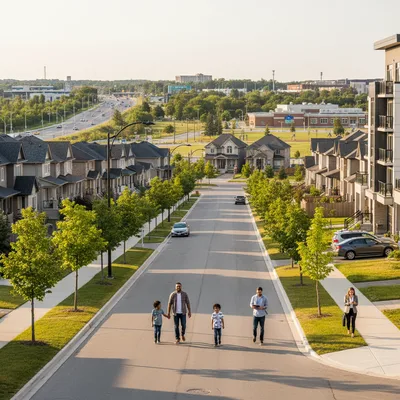
In Brampton, school search and neighbourhood search are closely linked. While we are not ranking neighbourhoods, these areas are frequently researched by families because they combine multiple schools, parks, libraries, and walkable amenities.
- Springdale and Sandalwood, dense family neighbourhoods with multiple elementary schools and a major secondary school in the area.
- Credit Valley and Bram West, newer builds, proximity to Mississauga and Highway 407, and access to French-language secondary options.
- Fletcher’s Meadow, popular with families looking for newer schools and community programming.
- Heart Lake, established neighbourhoods, access to recreation, and multiple school options.
When comparing neighbourhoods, also consider daily logistics, do you need before and after school care, how long is the bus ride, and can your child safely walk or bike. For families planning their broader “settling in” routine, pairing school research with local amenities helps. You can also plan your weekend scouting trips around food stops using our local guide: The 25 best restaurants in Brampton (2026 foodie guide).
Private school and Montessori options in Brampton: costs, admissions, and what to ask
Private schools in Brampton range from Montessori elementary campuses to full JK to Grade 12 institutions. For many families, private school is not “better,” it is “different,” often with smaller classes, different discipline models, and more structured enrichment.
Costs, tuition varies widely by school and grade. Expect additional fees for uniforms, transportation, lunch programs, and extracurriculars. Always ask for the full fee schedule in writing for the coming year.
Where to compare private schools, Our Kids is one of Canada’s major directories for private schools and admissions guidance: https://www.ourkids.net/brampton-private-schools.php.
Questions to ask at open houses
- What is the average class size by grade?
- How do you support students who need ESL or learning support?
- What is the homework load, and what tutoring is available?
- What is your student discipline policy, and how are parents informed?
- What are the graduation outcomes and post-secondary pathways?
Practical tip, if you are considering Montessori for JK to Grade 6, ask how and when the school transitions students to a more traditional academic structure, especially if you expect to move back into the public system later.
Step-by-step: How to research a Brampton school before you register
- Start with your address, confirm your boundary school(s) with the appropriate board.
- Pull EQAO context, look up results and trends for the school and nearby comparables.
- Check Fraser scores as a quick scan, use it to identify outliers, then dig deeper.
- Review programs, confirm French Immersion entry points, special education supports, arts, and sports.
- Call the office, ask about class organization, before and after school care, and newcomer supports.
- Visit if possible, attend an open house, walk the neighbourhood at arrival and dismissal time.
- Talk to parents, ask what they wish they knew before starting.
- Make a logistics plan, childcare, commute, bus routes, and contingency if boundaries change.
If you are new to Canada and also deciding where to live, it can help to broaden the conversation beyond schools. Cost-of-living comparisons are part of the equation for many newcomers, and it can be useful to see how other places break down expenses. One example is this cross-site explainer: The real cost of living in New Zealand 2026: a city-by-city breakdown.
Finally, schools do not operate in a vacuum. City planning, transit, and major employers shape neighbourhood growth and student populations. For local context on major industry decisions that may influence housing and enrolment patterns over time, see: Stellantis considers Chinese EV assembly at Brampton plant.